Make room, not a clean sweep.
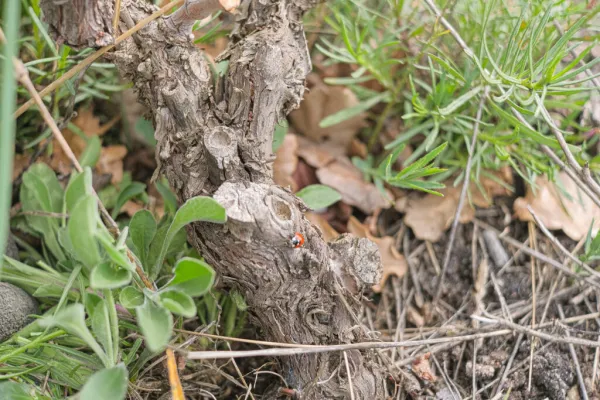
No herbicides or pesticides. We work around each vine, keep cover crops between the rows and plant along the edges so insects, birds and bats can move through the vineyards.
Carmen Etcheverry & Martin Ballot · Latour-de-France
In Latour-de-France, we are continuing the story of a family estate and searching for ways to farm in a region where water is becoming scarce. Across 7.5 hectares, vines grow alongside barley sown between the rows and trees planted at the edges. An exploration that runs from vineyard to cellar, from wine to beer, with resilience a necessity and joy a way of working.
Our story, our work ↓We did not begin with a blank page. There were Cécilia’s vines, more than twenty years of organic farming, and plots planted at very different times, some more than a century ago.
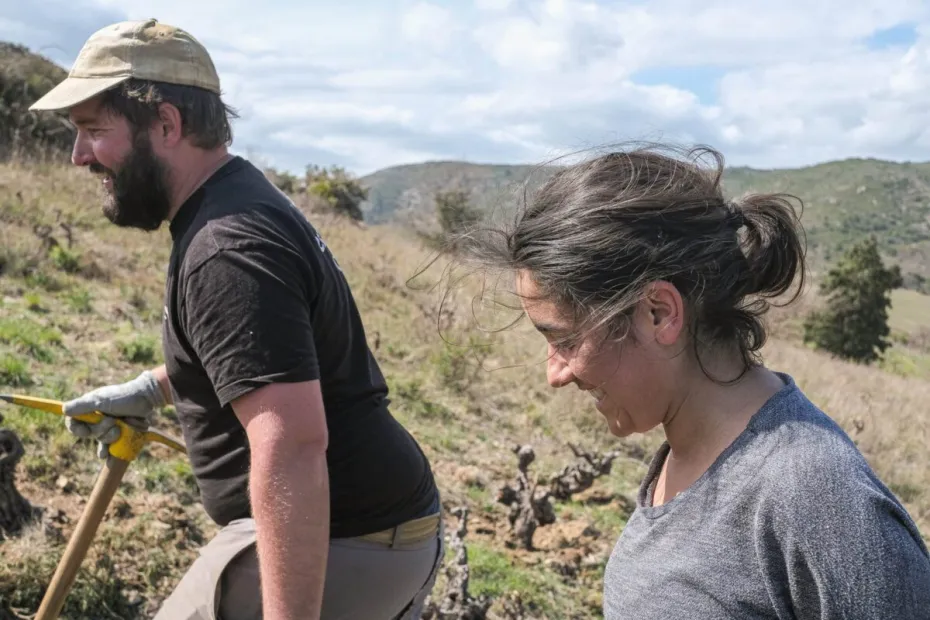
Carmen grew up among these plots. In 2020, we moved into the village and began turning an old house into our cellar. The slope and condition of each plot set the pace: hoe in hand, vine by vine, we clear each trunk, open the soil and try to hold on to every rainfall.
Today, our 7.5 hectares are a patchwork of inheritance and recovery. We are trying to save neglected vines, without yet knowing which ones will come back. Between other rows we sow barley, legumes and brassicas to cover and structure the soil and, eventually, brew with barley grown on our own land.
No herbicides or pesticides. We work around each vine, keep cover crops between the rows and plant along the edges so insects, birds and bats can move through the vineyards.
Where a plot allows it, barley is sown between the vines and malted locally. In the cellar, our wine lees provide the native yeasts that ferment our beers.
Through the Bande de Latour, the local machinery cooperative and the Agly plain AMAP, we share equipment, information, orders and a helping hand.
In the cellar
Native-yeast fermentations, no filtering, no fining. We aim to make wine without additives or added sulphites. When a wine needs them, we add the smallest possible dose of sulphites.
Prices incl. VAT, April 2026
Availability and vintages on request.
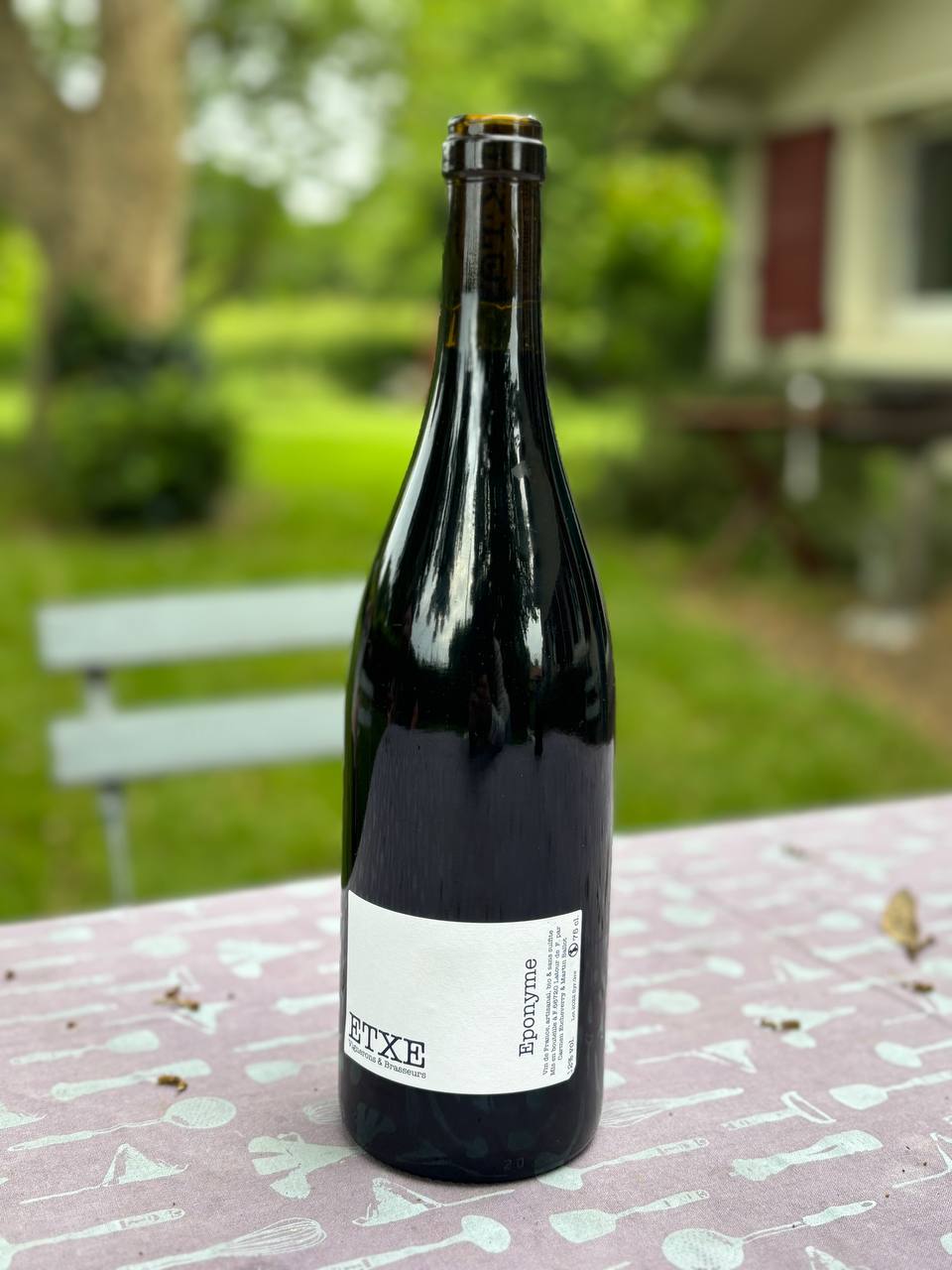
Red
2024 · 100% Syrah · floral and fresh
Harvested on 22 August, with a short four-day maceration. No additives or sulphites.
€12incl. VAT
Red
2021 · Carignan, Syrah, Grenache, Lledoner Pelut
Full-bodied and complex · aged 12 months in barrels used for at least five wines.
€16incl. VAT
Red
2013 · Carignan, Syrah, Grenache, Lledoner Pelut
Powerful and complex · aged in barrels used for seven wines.
€20incl. VAT
Pét-Nat
2024 · 100% Grenache · 75 cl
Festive and generous · naturally sparkling method, disgorged by hand.
€18incl. VAT
Sparkling
2024 · fermented pomace infusion · 3.5%
33 cl / 75 cl · surprising and refreshing, inspired by piquettes.
€3.50 / €7incl. VAT
Beer
2025 · blonde beer · 5%
33 cl / 75 cl · local malt, wild yeasts and solar heating.
€3.50 / €7incl. VAT
Prices incl. VAT · Pacotille and L’Innocente: 33 cl / 75 cl.
Press
A morning with a hoe, an hour behind the microphone: two ways into our work.
Made in Perpignan spends a morning with us in an old vineyard. Hoe in hand, we discuss water retention, beneficial insects, trees along the plot edges and our first sowings between the rows.
In the Cultiver l’avenir podcast, the conversation continues with rainless winters, cover-crop trials and their limits, and the role of the collective when it is time to observe, decide and begin again.
Read the report ↗Listen to the Cultiver l’avenir podcast ↗